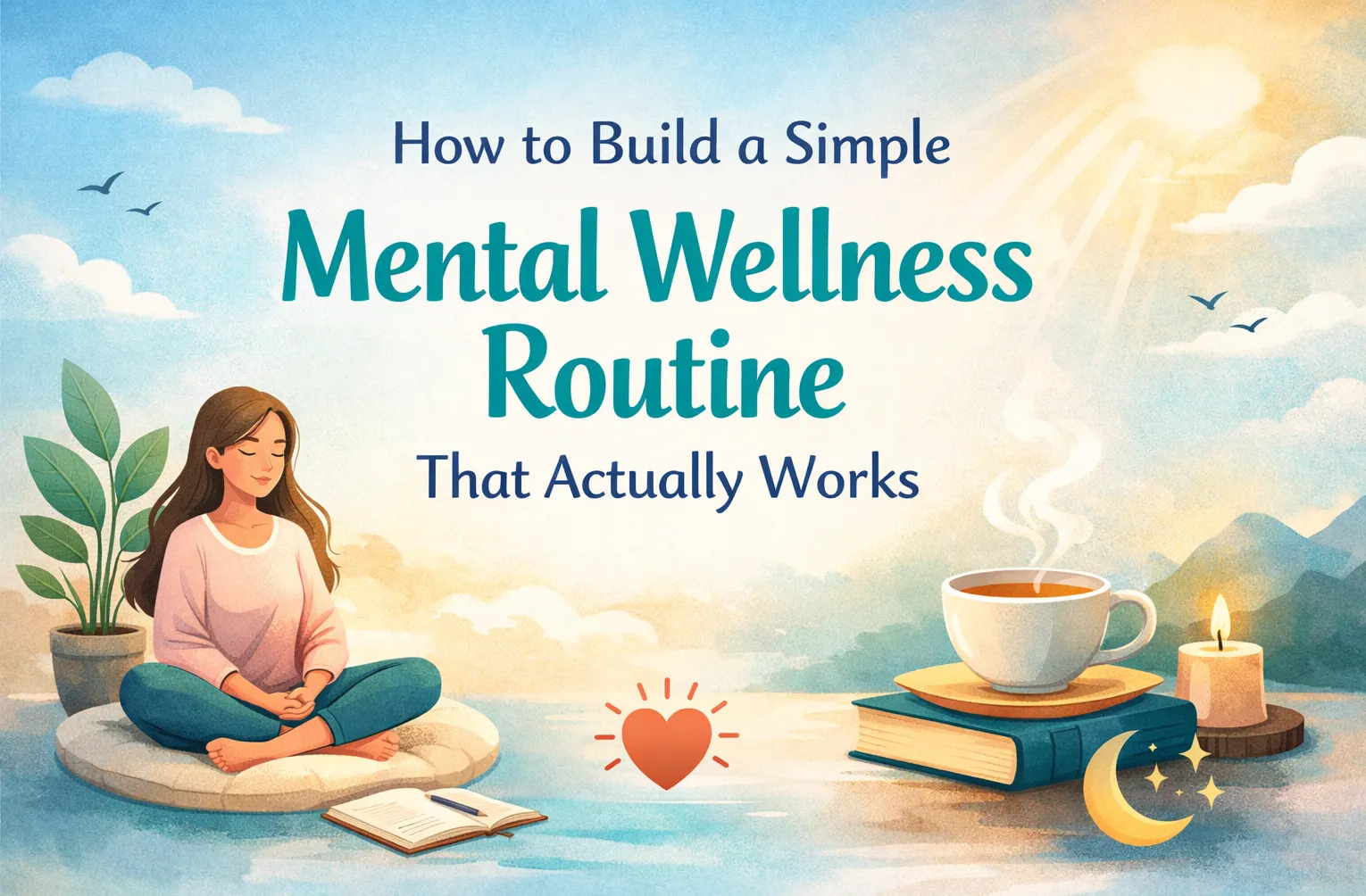
How to Build a Simple Mental Wellness Routine That Actually Works

Building a mental wellness routine should feel supportive, realistic, and sustainable. Yet, many people struggle to maintain one because they believe mental wellness requires rigid schedules, long meditation sessions, or constant motivation. When routines feel overwhelming or unrealistic, they are often abandoned within days.
The truth is much simpler: a mental wellness routine works best when it fits real life. You do not need perfection, hours of free time, or extreme discipline. What truly matters is consistency, intention, and small daily actions that support your emotional and mental balance.
In this complete guide, you will learn how to build a simple mental wellness routine that actually works, even if you feel busy, tired, or unmotivated. The goal is not to change your entire life overnight, but to create habits that gently support your mental health every single day.
What Is a Mental Wellness Routine?
A mental wellness routine is a set of intentional daily habits that support your emotional, psychological, and mental well-being. These habits help regulate stress, improve emotional awareness, and strengthen your ability to handle everyday challenges.
Unlike productivity routines, a mental wellness routine is not about doing more. It is about creating space — space to breathe, reflect, and respond instead of reacting automatically to stress.
A healthy mental self care routine does not aim to eliminate negative emotions. Stress, anxiety, sadness, and frustration are part of being human. Instead, the routine helps you experience these emotions with more balance, clarity, and self-compassion.
For beginners, the most effective mental wellness routines are gentle, flexible, and realistic.
Why Most Mental Wellness Routines Fail
Many people start a daily mental wellness routine with good intentions but give up quickly. This usually happens because the routine was never designed to fit their lifestyle.
Some common reasons mental wellness routines do not last include:
- Trying to change too many habits at once
- Following rigid schedules that do not allow flexibility
- Expecting fast emotional transformation
- Treating mental wellness like a task instead of a practice
- Comparing personal progress to others
When a routine feels like pressure or obligation, it creates resistance. And resistance is the fastest way to quit.
A routine that actually works is one you can maintain even on difficult days.
The Core Principle: Simplicity Creates Consistency
The most important rule when building a mental wellness routine is simplicity.
You do not need long meditation sessions, expensive tools, or complicated techniques. In fact, complex routines often fail because they require too much effort to maintain.
Small actions practiced daily are more powerful than complex routines practiced occasionally.
Consistency builds emotional stability. Simplicity reduces mental resistance. When your routine feels easy, it becomes sustainable.
Your mental wellness habits should support your life — not compete with it.
Step One: Clarify the Purpose of Your Mental Wellness Routine
Before choosing habits, clarify why you want a mental wellness routine.
Ask yourself:
- Do I want to reduce daily stress?
- Do I want more emotional balance?
- Do I want better focus and clarity?
- Do I want to prevent burnout?
Your routine should serve your personal needs, not social media trends or unrealistic standards.
When your purpose is clear, your routine feels meaningful — and meaningful routines last longer.
Step Two: Build a Simple Morning Mental Wellness Routine
Mornings shape your emotional state for the entire day. A strong morning mental wellness routine does not need to be long or complicated.
Simple morning habits may include:
- Taking five slow, deep breaths
- Avoiding your phone for the first few minutes
- Gentle stretching or movement
- Setting a calm intention for the day
These small actions help regulate your nervous system and reduce stress before the day begins.
Even five minutes of intentional calm can dramatically improve emotional resilience throughout the day.
Step Three: Create a Flexible Daytime Mental Wellness Routine
Mental wellness does not stop after the morning. Throughout the day, your mind accumulates tension, stimulation, and emotional pressure.
A daily mental wellness routine during the day should focus on short pauses rather than long practices.
Helpful daytime mental wellness habits include:
- Short breathing breaks
- Releasing tension in the shoulders and jaw
- Drinking water mindfully
- Stepping outside for fresh air
- Pausing before reacting emotionally
These small moments prevent emotional overload and help you stay grounded.
Step Four: Design a Calm Evening Mental Wellness Routine
Evenings are essential for emotional recovery. Without a calming evening routine, stress carries into the next day and disrupts sleep.
An effective evening mental self care routine may include:
- Reducing screen time before bed
- Writing down worries to clear the mind
- Reflecting on one positive moment from the day
- Practicing slow breathing or relaxation
A consistent evening routine signals safety to your nervous system and prepares your mind for rest.
Choosing Mental Wellness Habits That Actually Work
Not all habits work for everyone. The best mental wellness habits are those that feel supportive, not stressful.
When choosing habits, ask yourself:
- Does this feel realistic?
- Can I do this even on a bad day?
- Does this reduce pressure or add more?
If a habit creates stress, simplify it. Mental wellness is not about discipline — it is about care.
How Long Should a Mental Wellness Routine Take?
An effective mental wellness routine does not require a lot of time. Many routines take as little as 10 to 15 minutes spread throughout the day.
Mental wellness is not about duration. It is about intention and consistency.
Short, intentional moments practiced daily create long-term emotional benefits.
How Long Does It Take to See Results?
Results from a daily mental wellness routine are often subtle at first.
Within the first two weeks, many people notice:
- Calmer emotional reactions
- Improved self-awareness
- Better focus
- Reduced mental tension
Long-term emotional resilience develops over months of consistent practice.
Progress is gradual — and that is normal.
Common Mistakes to Avoid
To build a routine that actually works, avoid these common mistakes:
- Trying to change everything at once
- Expecting constant happiness
- Being overly critical of yourself
- Giving up after missing a day
Mental wellness is not about perfection. It is about returning to the routine gently, again and again.
When to Adjust Your Mental Wellness Routine
Your life will change — and your routine should change with it.
If your schedule, energy levels, or emotional needs shift, adjust your routine without guilt. Flexibility is a sign of a healthy mental wellness routine, not failure.
Mental Wellness Is Not About Constant Happiness
A mental wellness routine does not eliminate difficult emotions. Instead, it teaches you how to experience them without being overwhelmed.
The goal is emotional awareness, balance, and self-compassion — not constant positivity.
When to Seek Professional Support
A mental wellness routine supports daily emotional health, but it does not replace professional care.
If you experience persistent anxiety, depression, or emotional distress, seeking professional support is a powerful and healthy choice.
Your routine and professional care can work together.
Final Thoughts: Build a Mental Wellness Routine That Supports You
A mental wellness routine should feel supportive, realistic, and sustainable. Start small. Stay consistent. Allow your routine to grow naturally with your life.
Mental wellness is not built through perfection, but through daily care.
That is how you build a simple mental wellness routine that actually works.