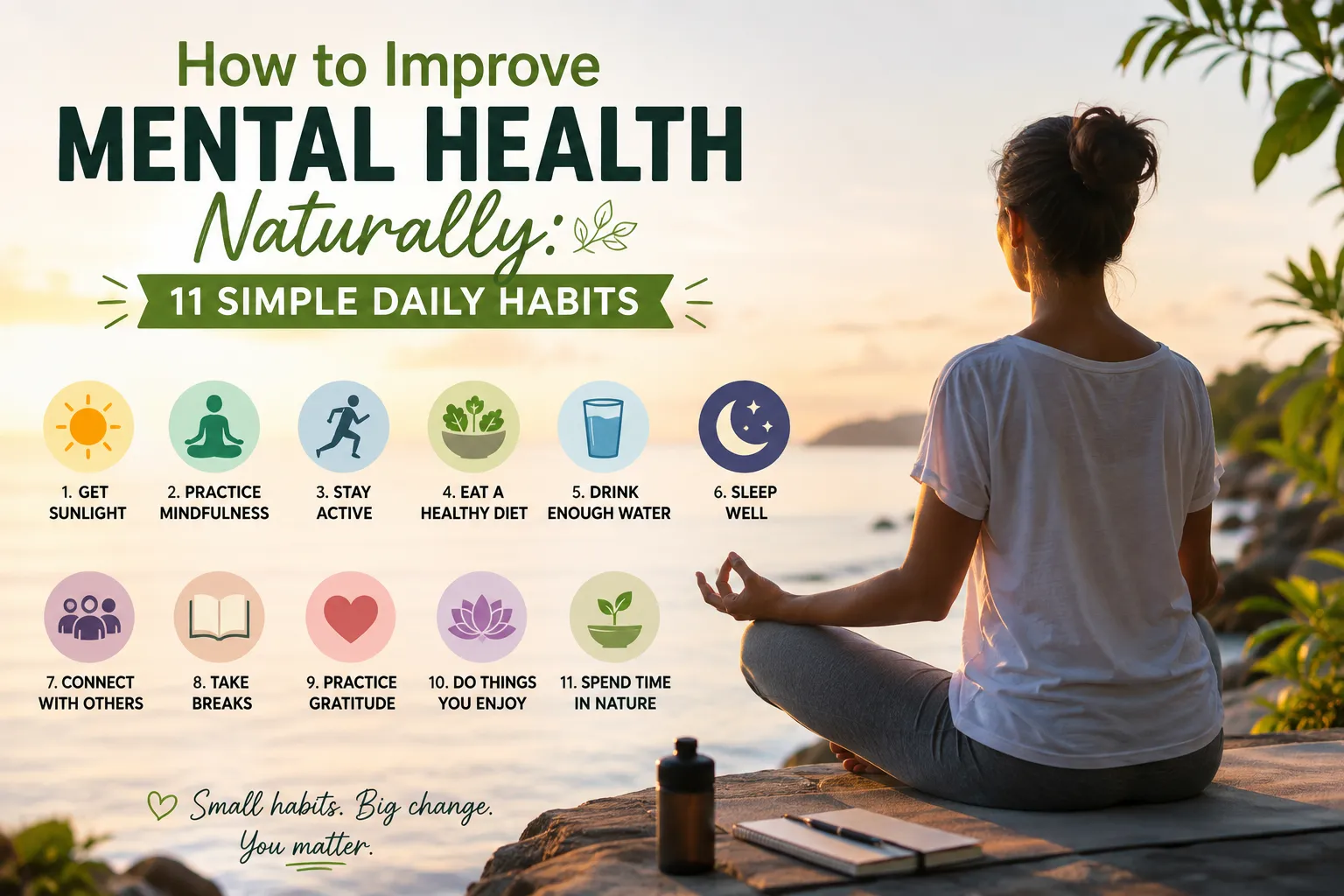
How to Improve Mental Health Naturally: 11 Simple Daily Habits
Discover 12 simple ways to improve mental health naturally through sleep, exercise, mindfulness, healthy habits, social connection and stress management.

1. Spend More Time Outdoors
Spending time outdoors can be a simple way to take a break from your usual environment and reconnect with your surroundings.
You don’t need to plan a long trip or spend hours outside. A short walk in a park, sitting in your backyard, gardening, or simply enjoying some fresh air can become part of your daily routine.
Try starting with 10 to 20 minutes outdoors each day. You can use this time to walk, breathe deeply, observe nature, or simply disconnect from your phone for a while.
The goal isn’t to make outdoor time another obligation. Instead, think of it as a small opportunity to slow down and give your mind a break.

2. Move Your Body Regularly
Physical activity is closely connected to overall well-being. You don’t have to follow an intense workout routine to become more active.
Walking, cycling, dancing, swimming, stretching, yoga, or doing simple exercises at home can all help you incorporate more movement into your day.
If you’re currently inactive, start slowly. A short daily walk can be a realistic first step.
Try choosing activities you actually enjoy. You’re more likely to maintain a habit when it feels enjoyable rather than like a punishment.

3. Prioritize Quality Sleep
Sleep is an important part of both physical and mental well-being. Poor sleep can leave you feeling tired, irritable, unfocused, and less prepared to deal with everyday stress.
Creating a consistent sleep routine can help.
Try going to bed and waking up at approximately the same time each day. Keep your bedroom comfortable and quiet, and consider reducing bright screens before bedtime.
You can also create a relaxing nighttime routine, such as reading, taking a warm shower, listening to calming music, or practicing gentle breathing exercises.
If persistent sleep problems are affecting your daily life, consider discussing them with a healthcare professional.

4. Practice Mindfulness
Mindfulness means intentionally paying attention to the present moment rather than constantly focusing on the past or worrying about the future.
You can practice mindfulness almost anywhere.
Start with a few minutes of mindful breathing. Sit comfortably, breathe naturally, and pay attention to the sensation of your breath.
When your mind wanders, gently bring your attention back to your breathing.
You can also practice mindfulness while walking, eating, washing dishes, or drinking your morning coffee.
The objective isn’t to completely empty your mind. Thoughts will naturally appear. The practice is simply noticing them without immediately becoming absorbed by them.

5. Eat a Balanced Diet
Food is another important part of a healthy lifestyle.
Instead of focusing on restrictive diets, aim for a balanced eating pattern that includes a variety of nutritious foods.
Fruits, vegetables, whole grains, beans, nuts, seeds, and other nutrient-rich foods can be part of a balanced diet.
It’s also helpful to stay hydrated throughout the day.
There isn’t one specific food that can solve every mental health problem. Think of nutrition as one piece of a larger picture that includes sleep, physical activity, relationships, stress management, and professional care when needed.

6. Connect With People You Trust
Human connection matters.
Spending time with friends, family members, coworkers, or other people you trust can provide opportunities to share experiences, laugh, talk, and feel supported.
You don’t need a huge social circle. Even one or two meaningful relationships can be valuable.
If you’re busy, start with something simple. Send someone a message, make a phone call, invite a friend for coffee, or take a walk together.
And remember that asking for support is not a sign of weakness. Sometimes talking with someone you trust can make a difficult day feel more manageable.

7. Practice Gratitude
Gratitude doesn’t mean pretending that everything is perfect. Instead, it can be a simple practice of noticing positive or meaningful aspects of your life.
You could keep a small gratitude journal and write down three things you’re thankful for each day.
They don’t have to be major events.
You might write about:
- A good conversation
- A peaceful morning
- A favorite meal
- Time with family
- A beautiful sunset
- Completing an important task
- A moment that made you laugh
Over time, this simple practice may encourage you to pay more attention to positive experiences in everyday life.

8. Reduce Excessive Screen Time
Technology can be useful, but spending too much time scrolling through social media or consuming constant information can make it difficult to disconnect.
You don’t necessarily need to eliminate social media.
Instead, consider creating healthier boundaries.
For example, you could:
- Turn off unnecessary notifications
- Avoid checking your phone immediately after waking up
- Take short screen breaks during the day
- Avoid excessive scrolling before bed
- Set specific times for checking social media
- Spend more time on offline activities
The goal is balance rather than completely removing technology from your life.

9. Make Time for Activities You Enjoy
Life can become focused on responsibilities, work, family, and chores. When that happens, enjoyable activities can easily disappear from your schedule.
Making time for hobbies can give you something positive to look forward to.
Consider activities such as:
- Reading
- Cooking
- Gardening
- Painting
- Drawing
- Listening to music
- Photography
- Dancing
- Writing
- Crafts
- Spending time in nature
You don’t need to be particularly talented at your hobby. The purpose is to enjoy the activity itself.
Even 15 or 20 minutes can be enough to create a small break in your day.

10. Learn Healthy Ways to Manage Stress
Stress is a normal part of life, but finding healthy ways to manage it is important.
Start by identifying what tends to increase your stress.
Sometimes the solution may involve practical changes, such as organizing your schedule, taking breaks, setting boundaries, or asking for help.
Relaxation techniques can also be useful.
Try:
- Slow breathing
- Gentle stretching
- Walking
- Meditation
- Listening to relaxing music
- Journaling
- Spending time outdoors
- Taking short breaks
You don’t have to solve every problem at once. Focus on what you can control and take one step at a time.

11. Know When to Seek Professional Support
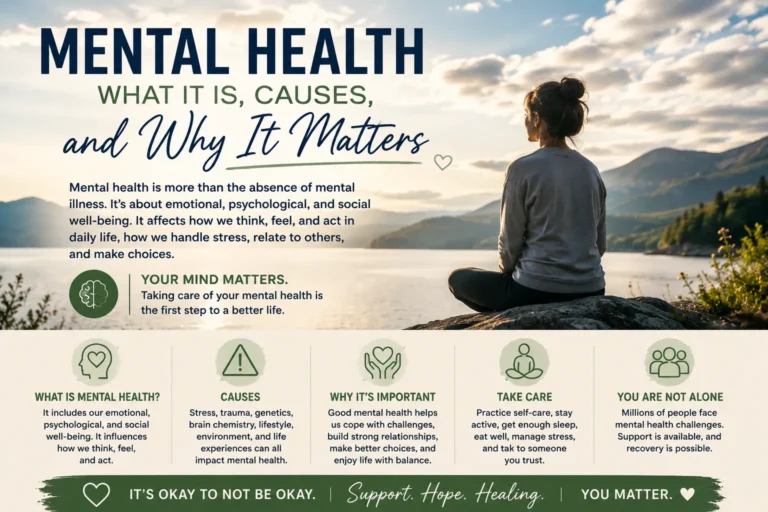
Natural lifestyle habits can support mental well-being, but they are not a replacement for professional mental health care.
If you’re experiencing persistent sadness, intense anxiety, significant changes in sleep or appetite, difficulty functioning in everyday life, or other symptoms that concern you, consider talking with a qualified healthcare or mental health professional.
You don’t have to wait until things become overwhelming before asking for help.
Professional support can work alongside healthy lifestyle habits and provide personalized guidance based on your individual situation.