Mental Health – What It Is, Causes, and Why Mental Health Matters
What Is Mental Health?
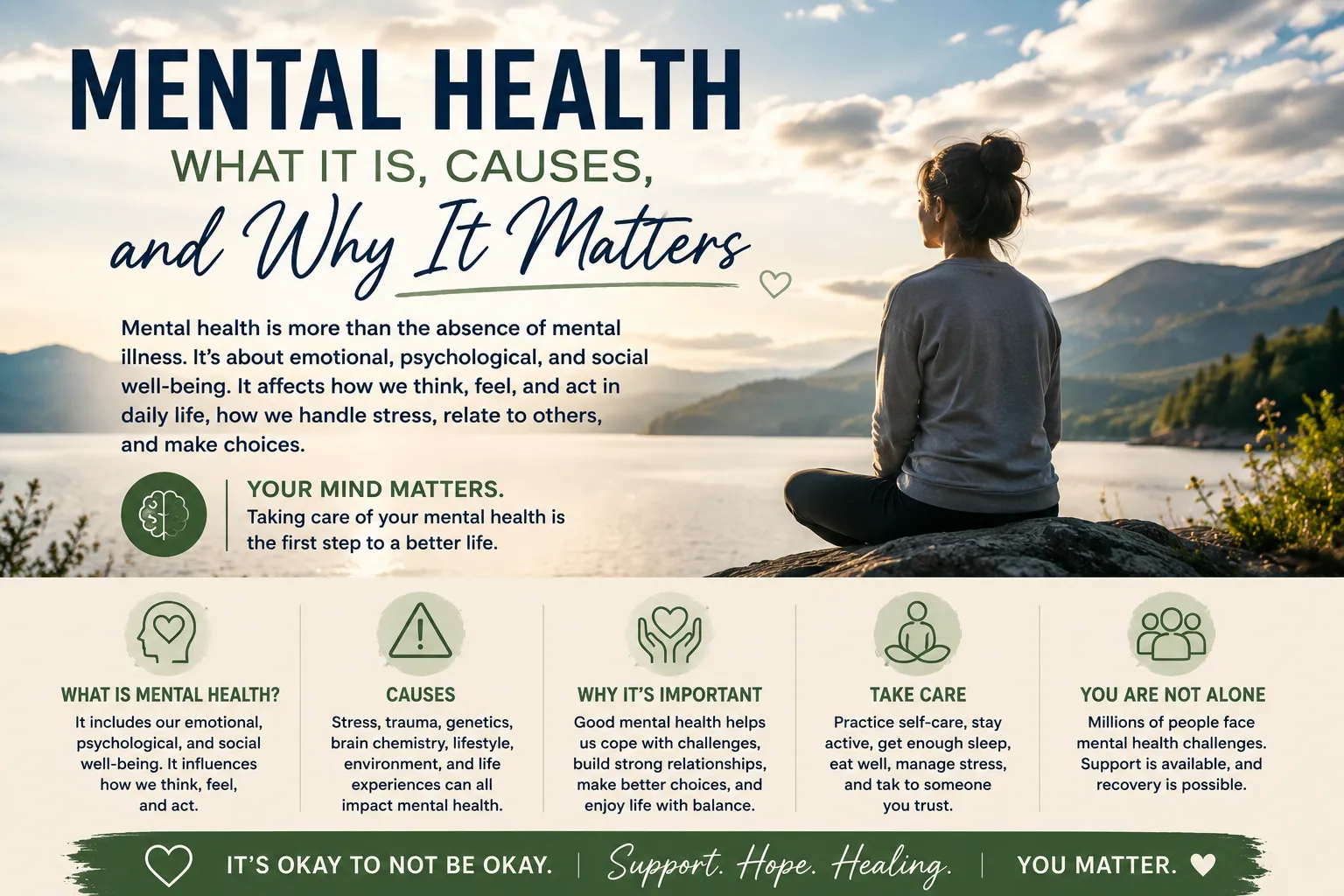
Mental health refers to a person’s emotional, psychological, and social well-being. It affects how we think, feel, behave, handle stress, make decisions, and connect with other people in daily life.
Having good mental health does not mean feeling happy all the time or never experiencing sadness, fear, or anxiety. Instead, it means having the ability to cope with life’s challenges in a healthy and balanced way.
Mental health plays a major role in every stage of life — from childhood to adulthood. It influences relationships, work performance, self-esteem, productivity, and overall quality of life.
In simple terms, mental health involves:
- Emotional balance
- Healthy thinking patterns
- Stress management
- Social connection
- Self-awareness
- Psychological well-being
Why Is Mental Health Important?
Mental health is essential because it directly impacts the way we live, work, and interact with the world around us. When mental health is neglected, both the mind and body can suffer.
People struggling with mental health issues may experience:
- Difficulty concentrating
- Low energy and motivation
- Sleep problems
- Emotional instability
- Relationship conflicts
- Physical symptoms such as headaches and stomach pain
- Reduced productivity and quality of life
Good mental health helps people face challenges with resilience, maintain healthy relationships, and enjoy daily activities with greater peace and balance.
Taking care of your mental health is just as important as taking care of your physical health.
Common Causes of Mental Health Problems
Mental health conditions can develop from a combination of emotional, biological, environmental, and social factors.
Some common causes include:
Chronic Stress
Long-term stress caused by work pressure, financial problems, family issues, or emotional overload can negatively affect mental health.
Trauma and Emotional Pain
Traumatic experiences such as abuse, loss, neglect, bullying, or violence may contribute to anxiety, depression, and other emotional disorders.
Genetics and Brain Chemistry
Some mental health conditions may be influenced by genetics or chemical imbalances in the brain.
Social Isolation
Lack of emotional support and social connection can increase feelings of loneliness, sadness, and anxiety.
Unhealthy Lifestyle
Poor sleep, lack of exercise, unhealthy eating habits, and substance abuse can worsen emotional well-being.
Common Mental Health Disorders
There are many different mental health conditions, and each person may experience symptoms differently.
Anxiety Disorders
Anxiety involves excessive worry, fear, nervousness, restlessness, and physical symptoms such as rapid heartbeat, sweating, and muscle tension.
Common symptoms of anxiety include:
- Constant overthinking
- Difficulty relaxing
- Panic attacks
- Irritability
- Digestive discomfort
- Sleep problems
Depression
Depression is more than sadness. It is a serious emotional condition that affects mood, motivation, energy, and daily functioning.
Symptoms may include:
- Persistent sadness
- Loss of interest in activities
- Fatigue
- Feelings of hopelessness
- Appetite changes
- Difficulty concentrating
Eating Disorders
Eating disorders involve unhealthy relationships with food, body image, and weight.
Examples include:
- Anorexia nervosa
- Bulimia nervosa
- Binge eating disorder
Addiction and Substance Abuse
Mental health issues are often linked to addiction involving alcohol, drugs, gambling, shopping, or other compulsive behaviors.
Personality Disorders
These conditions affect the way individuals think, feel, and relate to others. They may involve emotional instability, impulsive behavior, and relationship difficulties.
Physical Symptoms of Mental Health Problems
Mental health conditions do not affect only emotions — they can also appear physically in the body.
Many people experience:
- Headaches
- Stomach pain
- Fatigue
- Muscle tension
- Chest tightness
- Rapid heartbeat
- Digestive issues
The connection between the brain and body is powerful. Emotional stress can trigger real physical symptoms.
How to Improve Mental Health Naturally
Improving mental health often requires small daily habits that support emotional balance and reduce stress.
Practice Regular Exercise
Physical activity helps release endorphins, improve mood, and reduce anxiety and stress levels.
Get Enough Sleep
Poor sleep can worsen emotional instability and increase anxiety symptoms.
Maintain Healthy Relationships
Supportive relationships play a major role in emotional well-being.
Reduce Stress
Meditation, breathing exercises, journaling, and mindfulness practices can help calm the nervous system.
Eat a Balanced Diet
Nutrition affects brain function and emotional health more than many people realize.
The Importance of Mental Health Prevention
Prevention is one of the most effective ways to protect emotional well-being and reduce the risk of severe mental health conditions.
Mental health prevention includes:
- Emotional education
- Stress management
- Healthy routines
- Social support
- Early intervention
- Self-care habits
Seeking help early can prevent symptoms from becoming more serious over time.
Breaking the Stigma Around Mental Health
Many people still feel ashamed to talk about emotional struggles. Unfortunately, stigma prevents countless individuals from seeking help.
Mental health problems are common and treatable. Asking for support is not weakness — it is self-awareness and courage.
Talking openly about mental health helps create understanding, compassion, and emotional support for others who may be suffering silently.
When to Seek Professional Help
Professional support is important when emotional symptoms begin interfering with daily life, work, sleep, or relationships.
A licensed mental health professional can help identify the cause of symptoms and recommend effective treatment options such as:
- Cognitive Behavioral Therapy (CBT)
- Counseling
- Stress management techniques
- Medication when necessary
- Lifestyle adjustments
Seeking help early often leads to better outcomes and improved quality of life.
Frequently Asked Questions (FAQs)
What is mental health?
Mental health refers to emotional, psychological, and social well-being that affects how people think, feel, and behave.
Can anxiety cause physical symptoms?
Yes. Anxiety can cause stomach pain, headaches, muscle tension, rapid heartbeat, and digestive problems.
Is mental health connected to physical health?
Absolutely. Poor mental health can negatively impact the body and increase the risk of physical illness.
How can I improve my mental health?
Healthy habits such as exercise, good sleep, emotional support, stress management, and professional therapy can improve mental well-being.
When should I seek help for mental health problems?
You should seek professional help when emotional symptoms begin affecting your daily routine, work, relationships, or quality of life.
Conclusion
Mental health is one of the foundations of a healthy and balanced life. Understanding what mental health is, recognizing warning signs, and adopting healthy emotional habits can improve both emotional and physical well-being.
Mental health care should never be ignored. The earlier people seek support and prioritize emotional balance, the greater their chances of living with peace, resilience, and quality of life.
Taking care of your mind is not a luxury — it is essential.